Content to Engage With
Intro: The Power of the Pause
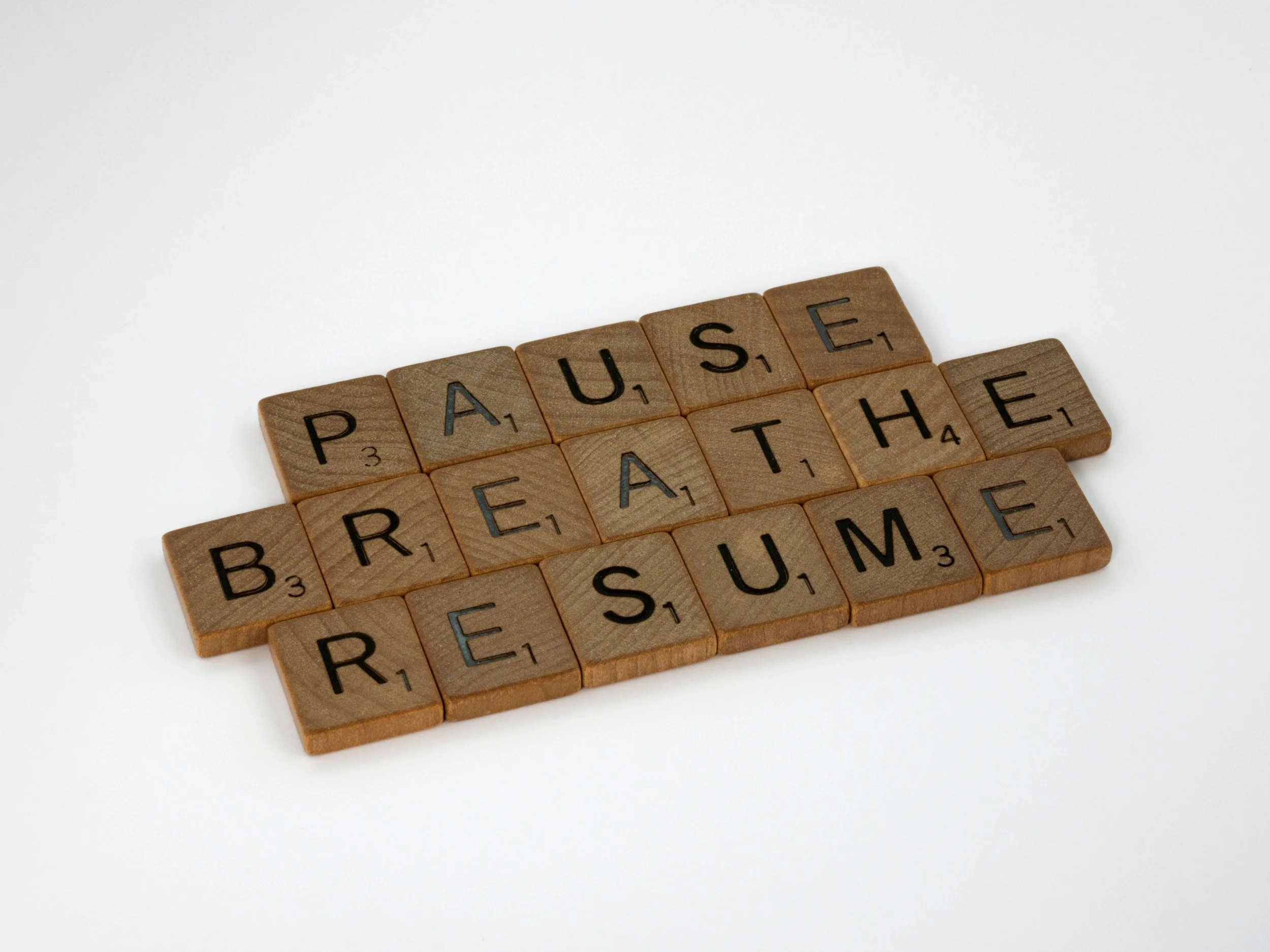
This week's focus is on something we have likely returned to many times throughout our work together: the power of the pause.
If you've spent any time in therapy with me, you've probably heard me say some version of, "Let's pause and take a few deep breaths." While it may seem simple, I genuinely believe this is one of the most effective mental health skills we can practice. It's also one of the hardest.
Our lives move quickly. Our brains are constantly taking in information, making predictions, solving problems, and trying to keep us safe. When stress levels rise, it's incredibly common to move into automatic pilot—reacting without much awareness of what's happening inside us. This isn't because we're doing something wrong. It's because our brains are designed to prioritize survival over reflection.
One of the remarkable things about being human, however, is our capacity for metacognition—the ability to think about our own thinking (Flavell). Rather than simply being swept along by our thoughts, emotions, and impulses, we have the ability to notice them, reflect on them, and choose how we want to respond.
This is where the pause becomes so powerful.
Outline
Content Portion ~ 10-30 minutes
Reflection Portion ~ 10-30 minutes
Invitation for How to Engage
Read through the content
Review your regulation and coping skills (both what is listed and what you already practice)
Reflect on and revise your own personalized toolbox
Content Engagement: Reacting vs. Responding
When we are reacting, our behaviors are often driven by our immediate emotional or physiological state. We might say something we later regret, avoid a difficult conversation, shut down, lash out, or become overwhelmed before we've had a chance to understand what is happening.
Responding, on the other hand, doesn't mean we stop having emotions. It means we create just enough space to notice them before deciding what we want to do next.
Viktor Frankl famously wrote:
"Between stimulus and response there is a space. In that space is our power to choose our response."
Whether or not those exact words originated with Frankl, the sentiment is strongly supported by modern neuroscience: when we create even a brief pause, we increase our ability to engage the parts of the brain responsible for reflection, planning, emotional regulation, and decision-making rather than relying solely on automatic survival responses.
What Happens During the Pause? (Ideas based in research by Dan Siegel and Stephen Porges)
The pause isn't about pretending difficult emotions don't exist or forcing yourself to "calm down." Instead, it's about becoming curious.
During a pause, you might begin asking yourself questions like:
What am I noticing in my body right now?
What emotion is showing up?
What thoughts am I having?
What does my nervous system seem to believe is happening?
What do I need in this moment?
These questions help shift us from being completely immersed in our experience to observing it with greater awareness.
Increasing awareness of our internal state allows us to better support our nervous systems and move toward greater flexibility rather than remaining stuck in survival states.
Why Practice Matters
If pausing feels difficult, you're not alone.
Our nervous systems were never designed to stop and thoughtfully evaluate every situation. They were designed to help us survive. When our brains perceive danger—whether it's physical danger or emotional experiences like rejection, shame, uncertainty, or conflict—they naturally shift toward protective responses (fight, flight, freeze, fawn, shut down). In our work together, you have probably already identified some of your own tendencies.
Just a reminder- The good news is that our brains are (still) remarkably adaptable. We can strengthen any new patterns we want with repeated practice. Every time you notice what's happening inside you, pause before reacting, practice a regulation skill, or respond with greater intention, you're reinforcing pathways that support emotional flexibility and resilience.
Like any new skill, this doesn't happen overnight. It develops through many small moments of practice. This is why we almost always practice pausing in our sessions together.

Reflection: Building Your Personal Toolbox
The remainder of this week's material includes some of my favorite regulation and coping skills. Some of these may feel very familiar because we've practiced them together in session. Others may be completely new.
As you take a look through them, I'd also encourage you to consider the regulation and coping skills that you use that are not listed here.
Ask yourself:
Which skills genuinely help me feel more grounded?
Which ones don't really resonate with me?
Which skills are easier to use when I'm mildly stressed versus completely overwhelmed?
Have there been different seasons of my life when certain coping strategies worked better than they do now?
There are no right or wrong answers.
One of the most important things I've learned is that regulation is deeply individual. What helps one person's nervous system may not help another's. Even for the same person, what feels regulating today may not be the most helpful strategy six months from now. That's completely normal.
As you engage this content, it might be helpful to write down your reflections. This can serve as something you can reference later when you pause and notice your nervous system could use some support.
Supporting Different Nervous System States
As you explore and re-engage some of these practices, remember that different nervous system states often need different kinds of support.
When we are overactivated (feel anxious, overwhelmed, panicked, irritable, restless, or emotionally flooded), we often benefit from skills that help slow the body, create safety, and bring us back into the present moment. These practices can be referred to as downregulation techniques.
When are system becomes underactivated (numb, disconnected, shut down, exhausted, hopeless, or stuck) we may not want to calm the system down—it may actually be gently increasing energy, movement, connection, or engagement that is most helpful. These practices can be referred to as upregulation techniques.
No states are "bad." All are adaptive responses that our nervous systems developed to help us navigate life's challenges.
If I have been doing my job, you all probably already have a toolbox that feels uniquely your own—a collection of practices you can draw from depending on what your mind, body, and nervous system need in any given moment. The goal of this toolbox isn't to eliminate difficult emotions or stay regulated all the time; rather, it's to become more aware of what's happening within you and to respond with greater flexibility, compassion, and intention.
My hope is that this reflection time will just serve as a reminder to you of the tools you already possess and give you some time to honestly reflect and re-evaluate what actually feels most helpful to you and your system.
We may have used different types of language in session to identify and work with your different nervous system states (Window of Tolerance, PolyVagal Theory, etc). As you reflect, feel free to modify the activity with the language that has resonated most for you.

Downregulation Techniques
Tools for when feeling overactivated (want to calm)
-
Containment Exercise (adapted from the Maiberger Institute EMDR resources)
Why we use it: Whenever something distressing happens that is overwhelming, the right hemisphere of the brain needs to review everything that has been experienced to identify what is dangerous and how to respond. When it gets stuck there (in unresolved trauma), the mind will review it repeatedly, trying to make sense of it. That is why it helps us to intentionally set aside (or contain) distressing experiences or concerns until you can give these experiences and the parts that are holding them your full attention. The containment exercise also can help provide a sense of distance between you and the trauma, and help you to understand "I am not my trauma."
Steps:
1. Visualize a “container,” place, or space to hold distressing images, emotions, and the parts holding the distress.
2. Now, think of what feels disturbing to you and place all that feels disturbing into the container, letting it all know that you will come back to it later.
3. Once all the distress is in the container, close the container or the space and visualize putting safeguards around it (keeping it all safe until you have space and time to revisit it).
4. Now bring your awareness back to the present.
-
Calm Place (adapted from the Maiberger Institute EMDR resources)
Why we use it: This is an exercise that helps us to self-sooth, feel more relaxed, and give us a greater sense of control over our emotional state.
Steps:
1. Visualize yourself going to a place that feels calm and peaceful. This place can be real or imaginary. As you think about this place, notice what you see, hear, and feel. What do you notice.
2. Concentrate on where you feel the present sensations in your body and let your body reflect how you are feeling.
3. As you concentrate on the picture, calm feelings and sensations, begin the BLS/Butterfly taps (3 to 5 sets/ each set 8-15 seconds each). Tap the peaceful feeling into your body.
-
Tree Grounding Exercise: (adapted from the Maiberger Institute EMDR resources)
Why we use it: When we start to feel overwhelmed or frightened, our energy and focus can start to leave our body. This exercise is to help you bring your awareness back to your body and stay in the present, grounding and reentering.
Steps:
Sit or stand and feel your feet rooted into the floor. Imagine a tree in front of you and then describe it out loud. Imagine yourself moving toward the tree and entering it. Now visualize yourself becoming the tree. Feel all the different parts. Your neck, head, arms, etc make up the branches and leaves and trunk.
-
Why we use it: Our breath is one of the only things that is under our conscious and unconscious control. We can use our breath to signal safety to our brain and body and to regulate our vagus nerve. The inhale of this breath gently energizes and brings in oxygen, the hold allows for gas exchange and helps us build awareness, and the exhale activates the parasympathetic nervous system, calming our heart rate and promoting a sense of safety.
Steps:
1. Preparation (Find a comfortable seated or lying position)
Gently close your eyes or soften your gaze.
Begin to notice the natural rhythm of your breath without changing anything.
Feel your body supported by the ground or chair beneath you.
We’ll gently build toward the 4-7-8 breath over a few rounds.2. Round 1: 3-3-4 (Warm-up)
Inhale for 3… 2… 1…
Hold for 3… 2… 1…
Exhale for 4… 3… 2… 1…
(Repeat once)
3. Round 2: 4-4-6 (Transition)
Inhale for 4… 3… 2… 1…
Hold for 4… 3… 2… 1…
Exhale for 6… 5… 4… 3… 2… 1…
(Repeat once)
4. Round 3: Full 4-7-8 Breath (2–4 rounds)
Inhale through your nose for 4…
Hold your breath gently for 7…
Exhale slowly and fully through your mouth for 8…(Repeat 2-4 rounds or as comfortable)
-
Why we use it: Our breath is one of the only things that is under our conscious and unconscious control. We can use our breath to signal safety to our brain and body. If we are feeling overwhelmed or activated, we can stimulate the parasympathetic response of our autonomic nervous system by extending our exhales. This type of breath helps our body to calm down and regulate.
Steps:
1. Breathe in deeply through the nose (really breathing into the diaphragm/belly) for 3-4 seconds.
2. Hold the breath at the top.
3. Exhale through the nose (starting with the belly and letting the chest fall last) for 6-8 seconds (double the inhale).
Repeat for about a minute and a half or until you feel your body relax.
-
Why we use it: When we start to feel overwhelmed or frightened, our energy and focus can start to leave our body. This exercise is to help you bring your awareness back to your body and stay in the present, grounding and reentering.
Steps:
Look around the room and notice something red.
Now, look around the room and notice something orange.
Continue for each color of the rainbow (yellow, green, blue (indigo if you want to be technical about it), purple).
Now look at your hands and just notice where you are, reminding yourself that in this moment you are safe and you are okay.
-
Orienting and Vagal Nerve Stimulation (adapted from the Kolber, 2023)
Why we use it: This practice is designed to help you communicate felt safety to your body by orienting to the space you are in and stimulating the vagus nerve (to help you continue developing the vagal brake). *This activity is adapted from Strong Like Water.
Steps:
Look around the room. Notice the space. Notice the door. Notice the details of the furniture. Notice how old you are. Notice the details in the space that help you know how old you are. Notice your hands. Notice your feet. Notice the sensations currently in your body. As you do, see if you can allow your breath to settle into a rhythmic pace. Try not to force your breathing and just allow it instead.
Now, look over your left shoulder and find a fixed point to look at for thirty seconds. As you do this, notice if you blink, sigh, or yawn. If so, this is a sign that you are stimulating the vagus nerve and moving back toward a ventral vagal state.
Let yourself sink into any groundedness or sense of calm you are feeling.
Repeat this same process on your right side. Once you experience a sense of groundedness while looking, come back to center and orient yourself again to the room
-
Checking In with Your Internal State (Adapted from Hendel, 2018)
Why we use it: This activity is to help you get in the habit of slowing down and tuning into your thoughts and emotions and get to know our sensations. It is helpful to practice this frequently, so invitation to set a reminder on your phone a couple times a day to “Check In With Body.”
Steps:
Pause, breathe, and just notice what you are sensing in your body. Let go of judgement with your exhales and just stay with the sensation for as long as you can, remaining curious and getting to know it.
Notice defensive thoughts and maneuvers and get curious about their reason for being there.
Continue to pause and breathe, noticing what is coming up.
When you notice something that feels hard (tension, sadness, aches, etc.) see if you can find words to best describe the emotions/sensations. Can you assign a cause to what you are experiencing? See if you can identify a core emotion (anger, sadness, fear, disgust, joy, excitement, sexual excitement) or inhibitory emotion (anxiety, guilt, shame).
Ask yourself, what is happening that brings up this emotion/sensation right now?
Offer yourself compassion and validate your feelings being there.
-
Working With Your Anxiety (Adapted from Hendel, 2018)
Why we use it: This activity is to help you relate to your anxiety with curiosity and compassion and help you to remember that you are well resourced to handle these sensations and emotions. Move through these suggestions and see which ones you resonate with today.
Steps:
Start by turning all of your attention to the soles of your feet. Feel the ground underneath them.
Practice deep belly breathing, slowing down your exhales.
Walk around a bit (outside preferable) and observe the scenery. Name and notice the colors, sounds, and textures around you.
Remind yourself that you are anxious and therefore it is not a good time to draw conclusions about the future.
Remind yourself that this feeling is temporary and will pass.
Focus on the body sensations that accompany your anxiety and meet them with compassion and curiosity, releasing any judgement with your exhale. Breathe deeply as you focus.
Imagine a peaceful place or a time you felt confident (you can use calm place as well).
Imagine something soothing like music, hot sun on your skin, a hug, etc.
Move your body in whatever way feels good for the moment.
-
Box Breathing
Why we use it: Box breathing is a structured breathing technique that can help calm the nervous system and improve focus. The equal timing of the inhale, hold, exhale, and hold can help reduce physiological arousal and create a sense of steadiness when we are feeling anxious, overwhelmed, or emotionally activated.
Steps:
Breathe in through your nose for 4 seconds.
Hold the breath for 4 seconds.
Exhale through your nose for 4 seconds.
Hold at the bottom of the exhale for 4 seconds.
Repeat the cycle for 1–3 minutes.
You can imagine tracing the four sides of a square as you breathe to help keep the rhythm.
-
EFT Tapping (Emotional Freedom Technique)
Why we use it: EFT tapping combines gentle tapping on acupressure points with mindful awareness of our emotional experience. Many people find that it helps reduce emotional intensity, increase a sense of grounding, and support nervous system regulation during periods of stress or anxiety.
Steps:
Identify the feeling or stressor you are experiencing.
Rate the intensity from 0–10.
Gently tap the side of your hand while saying a compassionate statement such as, “Even though I’m feeling anxious right now, I accept myself and my experience.”
Tap 5–7 times on each point: eyebrow, side of eye, under eye, under nose, chin, collarbone, under arm, top of head.
Take a slow breath and re-rate the intensity.
Repeat if needed.
Upregulation Techniques
Tools for when feeling underactivated (want to mobilize)
-
Temperature Change: Ice Cubes on Wrists
Why we use it: A sudden cool sensation can help interrupt spiraling thoughts and bring attention back to the body. Temperature changes can provide a grounding sensory input that helps us reorient when we are feeling emotionally overwhelmed or dissociated.
Steps:
Hold an ice cube or place a cold pack on the inside of your wrists.
Focus on the sensation of cold for 20–30 seconds.
Take slow breaths while noticing the temperature.
Repeat on the other wrist if helpful.
-
Longer Inhales Than Exhales
Why we use it: When we are feeling shut down, fatigued, numb, or low-energy, making the inhale slightly longer than the exhale can gently increase alertness and activation. This can help bring more energy into the body without becoming overly stimulated.
Steps:
Inhale through the nose for 5–6 seconds.
Exhale through the nose for 3–4 seconds.
Keep the breath smooth and comfortable.
Repeat for 30–60 seconds.
If you begin to feel lightheaded or overly activated, return to a normal breathing pattern or switch to extended exhales.
-
Going on a Walk
Why we use it: Walking is an excellent upregulation technique when we feel stuck, numb, shut down, or mentally foggy. Gentle movement increases circulation, engages the body, and can help shift us out of a collapsed or immobilized state. Walking outdoors can provide additional regulation through sunlight, fresh air, and sensory input.
Steps:
Stand up and begin walking at a comfortable pace.
Notice the sensation of your feet making contact with the ground.
Allow your arms to swing naturally.
Look around and name 3–5 things you can see.
Continue for 5–20 minutes.
The goal is not exercise performance—it is helping your nervous system reconnect with movement and the present moment.
-
Mental Movie: (adapted from the Maiberger Institute EMDR resources)
Why we use it: Mental Movies are a great way to envision a future situation and practice how you might handle it. It is also an opportunity to notice how you feel throughout the imagined upcoming event and to find the appropriate resources to help you feel confident and competent.
Steps:
Take some time to think about a situation that is coming up that you are worried about. Notice what you see, what you are thinking, what you are feeling, and what you are sensing in your body. Spend some time here and really notice what comes up.
Then, think through what resources might help you feel more confident and empowered. Are there any positive statements about yourself that can help you feel strong? What are some of your strengths that can be utilized in this situation? Is there any support that could help you? Is there anything else you need to see yourself handling the situation successfully?
Now, go ahead and run the movie from start to finish in your mind’s eye, envisioning yourself successfully handling the situation, utilizing your resources. Make changes and add resources until you feel capable and empowered. Pay attention to your body and only continue when you feel strong in your body and mind.
Now, run the movie in your mind’s eye from start to finish while you are doing BLS (Butterly taps or other BLS). Run the movie 3-5 times, allowing the empowered feelings to grow with each set. Use BLS throughout the whole movie (you control the length of each set).
-
Body Scan and Exploring Activity
Why we use it: The body scan allows us to orient to the here and now and bring ourselves back into the experience of our body. As we do this, we can also get curious about what it looks like to support our body.
Steps:
Scan your body from head to toe and notice any parts of your body holding sensations, tightness, or constriction.
When you are experiencing these sensations, see if you can tap into curiosity and play around with different ways of moving your body. (i.e. For tightness in shoulders- explore movement; For a lump in your throat- explore making different sounds; For a pounding heart - place your hand on your heart and notice the support; For heaviness in the chest - give yourself a bear hug; For trembling hands - try tightening them or loosening them). These ideas are merely a suggestion. The invitation is to get curious about your experience and see what happens when you engage your sensations in new ways.
-
Giving Yourself Compassion Activity (Adapted from Hendel, 2018)
Why we use it: We all need to be accepted and loved unconditionally to function best and we must learn to relate to our pain in the same way: to accept, soothe, and treat ourselves with kindness, especially when we are hurt. This is a practice to help us relate to ourselves with compassion and acceptance so that our brains can calm and we can feel seen, safe, and accepted in the moment.
Steps:
Think of a recent event or memory that brought up hard feelings.
Write it down.
Ask yourself what you would say or do to comfort a loved one who experienced the same thing and get the same way as you. Write down what you would do or say.
Once you access the compassion that you would imagine giving to someone else, experiment with turning that compassion inward toward the part of you that was suffering recently. Actually try directing the comforting words or image to the part of you that is hurting.
Practice giving yourself permission to take in that compassion.
Breathe deeply and use your imagination to breathe in the compassion and breathe out the distress.
Notice your body’s response to this.
If this is hard- that is okay. It’s difficult because you are actually doing it and hard things take practice. Give yourself a pat on the back for trying and validate that self-compassion might be one of the hardest things we ever learn to do.
Take a moment and write down two words that describe your response to this experiment (this can be thoughts, feelings, sensations, etc. that you notice).
-
Eating a Sour Candy (such as a Warhead)
Why we use it: Strong sensory input can help shift attention away from racing thoughts and back into the present moment. The intense sour taste often acts as a grounding tool that helps interrupt panic, dissociation, or emotional flooding.
Steps:
Place the sour candy in your mouth.
Notice the taste, texture, and physical sensations.
Focus your attention fully on the sensory experience.
Take a few slow breaths as the intensity decreases.
-
Temperature Change: Cold Shower
Why we use it: A brief cold shower can provide a strong activating input to the nervous system. It can be particularly helpful when feeling sluggish, disconnected, emotionally shut down, or needing a rapid shift in physiological state.
Steps:
Start with your normal shower temperature.
Gradually turn the water cooler.
Allow the cool water to run over your arms, legs, and torso for 15–60 seconds.
Focus on breathing steadily through the sensation.
Return to a comfortable temperature if needed.
This technique should feel stimulating, not overwhelming.

You might notice that, for you, some of the exercises help you both up and down regulate, help with neither, or may feel like they are in the wrong section. That is ok!
As you reflect and consider your personalized toolbox, remember to be both honest and kind to yourself. There are no right or wrong answers. The goal is not to force yourself to feel a certain way, but to gently help your nervous system move toward a state where you feel more present, connected, and able to respond rather than react.
**The information contained herein is not therapeutic advice nor a substitute for therapy. It should not be used to diagnose or treat any mental health problem. If you are located within the United States and you need emergency assistance please call 911 or go to your nearest emergency room. If you are located within Colorado you may also call the Colorado Crisis Line at 844-493-TALK (8255).